Supporting Parents, Carers and Families
Choosing the right college for a young person with Special Educational Needs and Disabilities (SEND) is a significant decision. At The Ark Specialist College, we are committed to making every stage of the process clear, welcoming and transparent from your first enquiry onwards.
Working in Partnership With Families
Families and carers understand the learner’s strengths, needs and experiences better than anyone. We value this knowledge and work collaboratively to understand what has supported them in the past, what matters to them now and what may help them progress in the future.
We keep families and carers involved through visits, personalised transition planning, regular communication and progress reviews. Our aim is to ensure they feel listened to, respected, well informed and fully involved throughout the learner’s college journey.
What Families and Carers Can Expect
- A clear and supportive referral and admissions process.
- Opportunities to visit the college, meet the team and ask questions.
- A carefully planned and personalised transition into college.
- A named member of staff who will provide consistent communication and updates.
- Individual learning goals that are informed by the learner’s Education, Health and Care Plan (EHCP) outcomes.
- Regular reviews of progress, wellbeing, support needs and future aspirations.
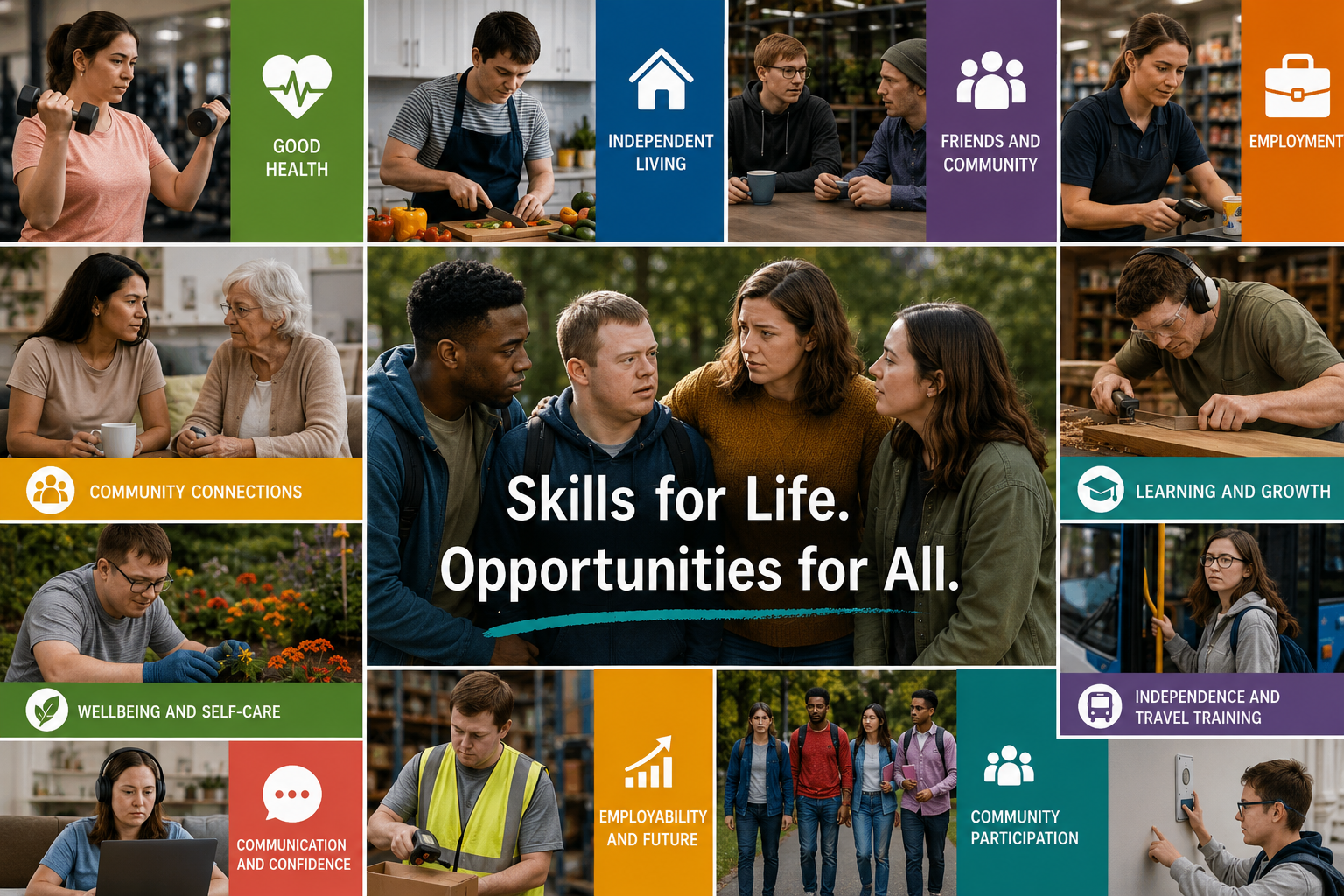
- A strong emphasis on practical skills, independence and preparation for adulthood.
Helping Learners Feel Safe, Secure and Confident
We understand that adjusting to a new environment can take time. Learners are supported to build trust and confidence through consistent routines, familiar staff, clear communication and a calm, reassuring approach. Every learner settles at their own pace, and we provide the time and support they need without placing unnecessary pressure on them.
Families as Partners in Progress
Families and carers are encouraged to take an active role in progress reviews and ongoing discussions. Their knowledge and insights help us ensure that learning goals remain meaningful, relevant and connected to the learner’s experiences at home, in college and within the wider community.
Frequently Asked Questions
Can we visit the college before making a decision?
Yes. We welcome learners, families and carers to visit the college, meet our team, explore the environment and ask questions before deciding whether the placement may be suitable.
Does the learner need an EHCP?
Most learners will have an Education, Health and Care Plan (EHCP) or will be progressing through the EHCP assessment process. Our team can discuss the learner’s individual circumstances and advise on the next steps.
How do we make a referral?
Referrals can be made by families, carers, local authorities, social workers, schools or other professionals. We will request relevant information and guide you through each stage of the admissions process.
How do you decide whether the placement is suitable?
We review the learner’s EHCP and supporting documents, meet with the learner and family, and complete a suitability assessment. This helps us understand whether we can safely and effectively meet the learner’s needs.
Is learning personalised?
Yes. Each learner has an individualised programme based on their strengths, needs, interests, aspirations and EHCP outcomes.
How do you support learners during transition?
We create a personalised transition plan, which may include visits, familiarisation sessions, visual information, meetings with key staff and a gradual introduction to the college.
Will families receive regular updates?
Yes. Open and consistent communication with families and carers is an important part of our approach. We provide regular updates and involve families in reviews and discussions about progress.
How do you support communication needs?
We adapt communication to each learner’s individual needs. This may include visual supports, simplified language, communication aids, structured routines and guidance from relevant professionals.
What support is available for emotional wellbeing?
Learners receive personalised support to develop emotional regulation, confidence, resilience and coping skills. Therapeutic input is available as part of the college’s wider support approach.
How do you support behaviour that may be challenging?
We take a calm, positive and person-centred approach. Staff aim to understand the reasons behind behaviour and use consistent support plans, proactive strategies and appropriate risk management.
How do you support independence and preparation for adulthood?
Learners develop practical skills for everyday life, including communication, decision-making, personal care, cooking, money awareness, travel skills, relationships and community participation.
Do learners have opportunities to prepare for employment?
Yes. Learners can develop employability skills through vocational activities, enterprise opportunities, work-related learning and support from staff to explore realistic future pathways.
How are learners kept safe?
Safeguarding is central to our practice. Staff follow clear safeguarding procedures, complete relevant training and use individual risk assessments and support plans to promote learner safety and wellbeing.
How is progress measured and reviewed?
Progress is monitored through individual learning targets, EHCP outcomes, observations, learner achievements and regular reviews with families, carers and involved professionals.
What happens if a learner’s needs change?
Support arrangements are reviewed and adapted where possible. We work with the learner, family, local authority and professionals to ensure that provision remains appropriate and responsive.
Is transport provided?
Transport arrangements are usually discussed with the relevant local authority. Families are advised to contact their local authority to confirm eligibility and available support.
What happens after college?
Transition planning begins early and focuses on meaningful next steps, which may include employment, supported internships, volunteering, supported living, adult services or community-based opportunities.
Arrange a Visit or Get in Touch
To speak to someone about your young person’s needs, please contact us or arrange a visit.